
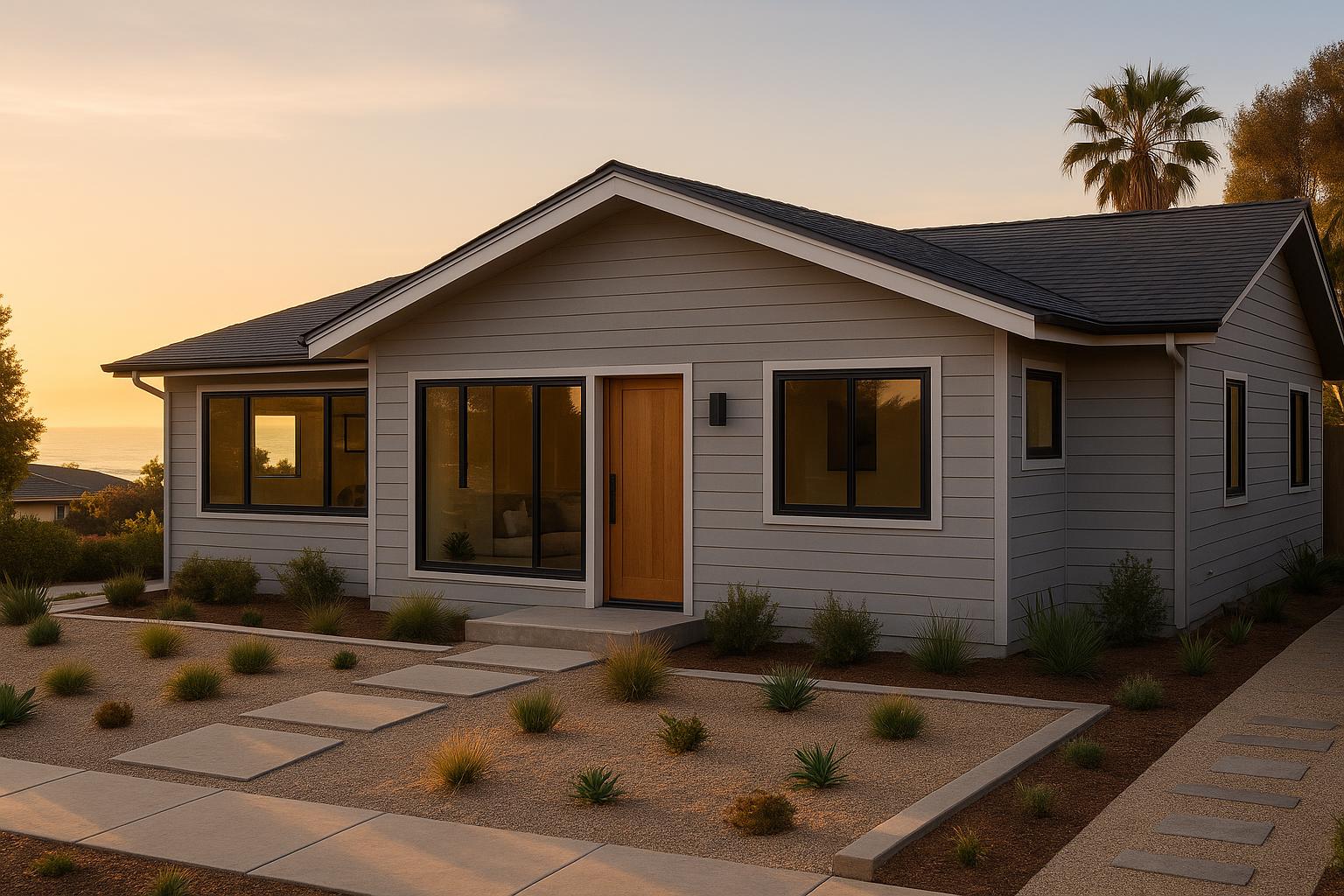
Coastal Living Is Beautiful — But It's Tough on Houses
There's a reason people pay a premium to live near the ocean in Solana Beach. The sunsets, the salt air, the sound of waves — it's hard to beat. But that same coastal environment that makes life so enjoyable is quietly working against your home every single day.
Salt air corrodes metal. Moisture creeps into places you'd never expect. UV exposure fades and degrades materials faster than it would even ten miles inland. And if you're planning a remodel, ignoring these realities can turn a dream renovation into an expensive lesson.
Whether you're updating a kitchen, renovating a bathroom, or taking on a full-home project, here's what coastal homeowners need to think about before the first wall comes down.
Salt Air Corrosion Is a Bigger Deal Than You Think
If you've ever noticed rust forming on outdoor fixtures or hinges that seem to deteriorate way too fast, you've already seen salt air corrosion in action. But the damage doesn't stop at what's visible. Salt-laden moisture can work its way into wall cavities, electrical systems, and structural fasteners over time.
During a remodel, this is actually an opportunity. When walls are opened up, a good contractor will inspect for hidden corrosion damage — especially around windows, exterior walls, and anywhere plumbing penetrates the structure.
What to do about it:
- Choose stainless steel or hot-dipped galvanized fasteners and hardware throughout the renovation
- Opt for marine-grade or corrosion-resistant hinges, pulls, and fixtures — especially in bathrooms and kitchens
- Ask your contractor to inspect framing and structural connections for existing corrosion while walls are open
- Consider upgrading to corrosion-resistant electrical boxes and connectors
Moisture Management Deserves Extra Attention
Solana Beach doesn't get a lot of rain, which can lull homeowners into thinking moisture isn't a concern. But coastal humidity is constant, and morning marine layers deposit moisture on and inside your home regularly. Pair that with the temperature swings between a cool foggy morning and a warm afternoon, and you've got conditions that promote condensation in wall cavities and under flooring.
A remodel is the perfect time to address moisture barriers, ventilation, and insulation — the things you can't easily fix once the drywall goes back up.
Key moisture strategies for coastal remodels:
- Install a high-quality vapor barrier or weather-resistant barrier behind exterior cladding
- Ensure bathroom ventilation fans are properly sized and vented to the exterior — not just into the attic
- Use moisture-resistant drywall (green board or cement board) in bathrooms and laundry areas
- Consider a whole-home dehumification strategy if you're doing a major renovation
Material Selection Matters More Here
The materials that perform well in an inland home don't always hold up the same way a few blocks from the Pacific. This applies to everything from exterior finishes to the flooring you choose for your living room.
Flooring
Solid hardwood can be temperamental in coastal environments because it expands and contracts with humidity changes. Engineered hardwood, luxury vinyl plank, porcelain tile, and polished concrete all tend to perform better in homes near the water. They're more dimensionally stable and less prone to warping or cupping over time.
Cabinetry
In kitchens and bathrooms, the cabinet material and finish matter. Solid wood with a quality sealed finish holds up well, but particleboard or MDF cabinets with a thin laminate can swell and deteriorate faster in humid conditions. If you're investing in a kitchen remodel, it's worth spending a little more on cabinetry that can handle the environment.
Exterior Materials
If your remodel includes any exterior work — a home addition, new windows, or an outdoor living space — fiber cement siding, composite decking, and powder-coated aluminum outperform wood and standard steel in coastal settings. They resist salt corrosion, UV degradation, and moisture damage far better than traditional alternatives.
Windows and Doors Take a Beating
Windows and sliding doors are often the weak link in a coastal home. Salt spray pits and corrodes aluminum frames. Seals degrade faster. And because many Solana Beach homeowners want to maximize ocean views and natural light, the windows tend to be large — which means more surface area exposed to the elements.
If your remodel budget allows for it, upgrading to high-performance windows with vinyl, fiberglass, or marine-grade aluminum frames is one of the best investments you can make. Look for windows with multi-point locking systems for better seals and Low-E coatings to manage UV exposure and heat gain.
Don't Forget About UV Exposure
Southern California sunshine is relentless, and homes close to the coast get the added intensity of light reflecting off the water. Over time, UV exposure fades paint, degrades wood finishes, and even damages interior furnishings.
During a remodel, you can mitigate this with:
- UV-filtering window films or Low-E glass
- Exterior paint and stain products specifically rated for high-UV environments
- Covered outdoor living areas that protect both you and your home's exterior finishes
- Interior finish choices — like UV-resistant flooring — that won't fade or yellow over time
Work With Someone Who Knows Coastal Construction
This might be the most important point on the list. A contractor who primarily works inland may not think about salt corrosion, marine-layer moisture, or the specific material choices that make a coastal remodel last. These aren't exotic concerns — they're everyday realities for homes in Solana Beach, Del Mar, Encinitas, and Cardiff-by-the-Sea.
When you're interviewing remodeling contractors, ask them directly:
- What materials do you recommend differently for homes near the coast?
- How do you handle moisture management in wall assemblies?
- What kind of hardware and fasteners do you use in coastal projects?
The answers will tell you quickly whether they understand the environment your home lives in.
A Remodel Is Your Chance to Build It Right
Here's the silver lining: if your home has been slowly losing the battle against the coastal elements, a remodel is your chance to fix that. You're not just making your home look better — you're making it perform better for the next twenty or thirty years.
At Legacy Home Builders, we work exclusively in Solana Beach and the surrounding coastal communities. Every material recommendation, every detail in our construction process, is informed by what we know about building homes that hold up beautifully in this environment. If you're thinking about a remodel and want to make sure it's done right for the coast, we'd love to talk.